Search...



General description:
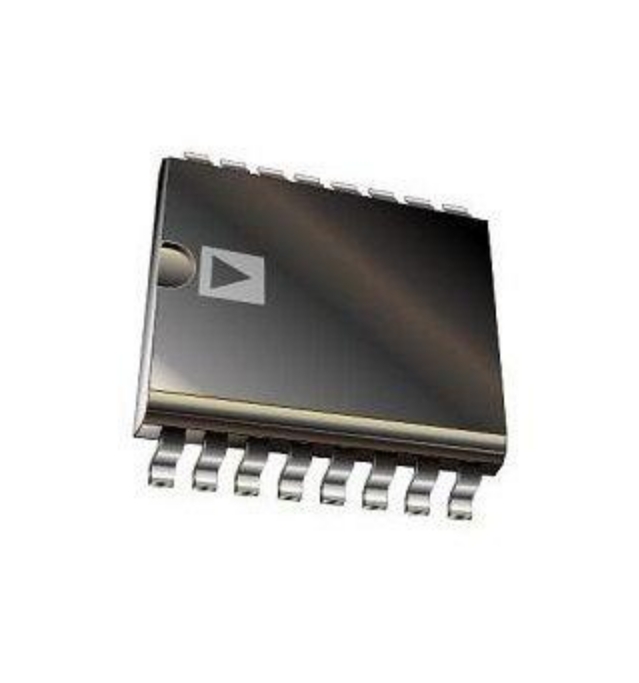
The 74HC595; 74HCT595 is an 8-bit serial-in/serial or parallel-out shift register with a storageregister and 3-state outputs. Both the shift and storage register have separate clocks. The devicefeatures a serial input (DS) and a serial output (Q7S) to enable cascading and an asynchronousreset MR input. A LOW on MR will reset the shift register. Data is shifted on the LOW-to-HIGHtransitions of the SHCP input. The data in the shift register is transferred to the storage registeron a LOW-to-HIGH transition of the STCP input. If both clocks are connected together, the shiftregister will always be one clock pulse ahead of the storage register. Data in the storage registerappears at the output whenever the output enable input (OE) is LOW. A HIGH on OE causes theoutputs to assume a high-impedance OFF-state. Operation of the OE input does not affect thestate of the registers. Inputs include clamp diodes. This enables the use of current limiting resistorsto interface inputs to voltages in excess of VCC.
Features and benefits:
• Wide supply voltage range from 2.0 V to 6.0 V
• CMOS low power dissipation
• High noise immunity
• 8-bit serial input
• 8-bit serial or parallel output
• Storage register with 3-state outputs
• Shift register with direct clear
• 100 MHz (typical) shift out frequency
• Latch-up performance exceeds 100 mA per JESD 78 Class II Level B
• Complies with JEDEC standards:
• JESD8C (2.7 V to 3.6 V)
• JESD7A (2.0 V to 6.0 V)
• Input levels:
• For 74HC595: CMOS level
• For 74HCT595: TTL level
• ESD protection:
• HBM: ANSI/ESDA/JEDEC JS-001 class 2 exceeds 2000 V
• CDM: ANSI/ESDA/JEDEC JS-002 class C3 exceeds 1000 V
• Multiple package options
• Specified from -40 °C to +85 °C and from -40 °C to +125 °C
Applications:
• Serial-to-parallel data conversion
• Remote control holding register
You can get your Nexperia 74HC595D,118 STOCK solution by flling out the form below and we will contact you immediately.
AXTEK Series NYQUEST CMSEMICON ST MICROELECTRONICS Featured Manufacturers Puya MCUs ICMAN Touch Chips ZXInfoTek Holtek MCUs MORNSUN Modules
Company Profile Certificates Terms & Conditions Privacy Statement


 MCU Solutions
 PCBA Solutions
 Bluetooth Solutions
 FAQ
FAQ Contact Us
 Company News
 Technology News
 Industry News
 PCBA News
 Company Profile
 Certificates
 Terms & Conditions
 Privacy Statement
 Home Appliances
 Beauty Appliances
 Lighting
 Kid's Toys
 Security Alarm
 Health Care